Showing posts with label cilantro. Show all posts

Thursday, August 21, 2014

Pork Shoulder Empanadas - Freestylin' the #jenisbook

Pork Shoulder Empanadas with Empanada Dough recipe—plus roasted pork shoulder, cherry tomatoes, and a Cilantro Emulsion—from Jeni's new cookbook, Jeni's Sple...

http://deepfriedrecipestv.com/

http://recipetube.tv/

http://raweats.tv/

http://kaukautime.blogspot.com/

http://funnykinevideos.blogspot.com/

Wednesday, October 02, 2013

Hawaiian Shoyu Chicken


Ingredients:

5 lbs chicken thighs, chicken hindquarters, or chicken drummettes/wings rinsed and drained.

Sauce:
2 cups Aloha shoyu
1 cup water
1 cup brown sugar
1-2 inch fresh ginger root halved and pounded.
6-8 cloves garlic smashed and peeled.  Rough chopped.
1 medium round white or yellow onion peeled and sliced    
4-6 star anise
2 bay leaves
1/2 cup shaoxing rice wine or straight whiskey
1/2 tsp Chinese five spice
Dash fresh cracked black pepper to taste
2 Tbsp vegetable or peanut oil


Garnish:
1 bunch sliced green onion
1 bunch cilantro or chinese parsley chopped
Sesame oil


Cooking Instructions:


In a big stockpot, heat oil til hot and add herbs of ginger, garlic, bay leaves,

round onion, and star anise to release aromatics.  Be careful not to burn them, 

then add shoyu, water, and whiskey.  Bring to a boil then add rinsed and drained

chicken pieces.  Bring to a boil then drop heat down to a simmer for 20 minutes.

 Slowly stir chicken and add sugar and black pepper and let simmer another 20

minutes.  Turn off heat and let stand for 15-30 minutes in pot.

Bring chicken to serving dish or pan.  Add garnish herbs over chicken and

drizzle sesame oil over chicken then add shoyu sauce from pot over chicken.

Serve with white or brown rice with Hawaiian Macaroni Salad!

So onolicious let's kaukau now!!

Enjoy!!

Serves 6


Tuesday, May 28, 2013

Banh Mi (Vietnamese Baguette Sandwich)


Banh Mi, is a popular Vietnamese sandwich, usually made on a wheat and rice flour baguette bread. Inside are thinly sliced carrots, daikon, cucumbers, onions, cilantro, jalapeno peppers -- then filled with a variety of meat or tofu fillings (grilled pork, ham, head cheese, etc.)

There are many types of fillings that can be put into Banh Mi but the most popular version includes cucumbers, pickled carrots and daikon, onion, cilantro, pate, butter, roasted or grilled pork, Vietnamese sausage, ham.  The Banh Mi is a popular Vietnamese fast food because of its low price and delicious taste.  Banh mi are not your ordinary sandwiches; they’re crunchy, filled fusion baguettes, stuffed full of fresh, fragrant and tasty Vietnamese ingredients.  This popular street food originated after French settlers first introduced bread to Vietnam back in the late 18th century.  But as the years progressed and the French rule eventually ended, the Vietnamese began to introduce their own fragrant and spicy flavors, including marinated grilled meats, pickled vegetables, fresh herbs and lots of chili peppers.

Ingredients:


1/2 cup shredded carrot
1/2 cup grated peeled daikon radish
1 tablespoon cider vinegar
2 teaspoons sugar
1/4 teaspoon kosher salt
3 tablespoons chili garlic sauce (such as Lee Kum Kee)
1 1/2 teaspoons sugar
1 (1-pound) pork tenderloin, trimmed
Cooking spray
1/2 teaspoon salt
3 tablespoons fat-free mayonnaise
2 (20-inch) baguettes (about 8 1/2 ounces each)
16 thin cucumber slices (about 1 cucumber)
16 cilantro sprigs
1/4 cup thinly sliced green onions (about 2)
1 seeded and thinly sliced jalapeño pepper


Preparation:


1. Combine the first 5 ingredients; cover and let stand 15 minutes to 1 hour. Drain.
2. Preheat oven to 400°.
3. Combine the chili garlic sauce and 1 1/2 teaspoons sugar; stir well. Place pork on the rack of a small roasting pan or broiler pan coated with cooking spray. Spread 2 tablespoons chili garlic mixture evenly over pork; sprinkle the pork with 1/2 teaspoon salt. Bake at 400° for 20 minutes or until a thermometer registers 155° (slightly pink). Cool; cover the pork, and refrigerate.
4. Combine mayonnaise and remaining chili garlic sauce mixture; cover and refrigerate.
5. Cut each baguette horizontally, cutting to, but not through, other side using a serrated knife. Spread mayonnaise mixture evenly on cut sides of baguettes. Thinly slice pork; divide pork evenly between baguettes. Top evenly with carrot mixture. Arrange 8 cucumber slices and 8 cilantro sprigs on each baguette. Top evenly with onions and jalapeño. Press top gently to close; cut each baguette into 4 equal servings.


In Hawaii there is a local Vietnamese bakery and restaurant named Ba-Le Sandwich and now a huge full scale bakery operation in Honolulu called La Tour.  My favorite type of banh mi is the pate and steamed pork version.  Lots of cilantro, jalapenos, sriracha, mayo, and hosin!  
My favorite pate and steamed pork!!  Heaven in baguette!!


Winnahz!!  I like kaukau!!  :D

Saturday, September 08, 2012

Vegan Asian Salad with Hoisin Sesame Balsamic Vinaigrette


Ingredients:

1lb fresh rinsed spinach
1 head romaine lettuce chopped
1/4lb mung bean sprouts
1 carrot peeled shredded
1 cucumber sliced and diced
1 large tomato sliced into wedges or 10 cherry tomatoes
1 green bell pepper seeded and chopped
2 nori sheets cut into flakes
chinese parsley or cilantro chopped
1 tsp ginger root minced
1 clove garlic crushed and minced fine


Dressing:

balsamic vinegar
hoisin sauce
sesame oil
extra virgin oil
black pepper


Procedure:

Cut veggies according to your preference. Combine in mixing bowl drizzle dressing either premix or straight drizzled from the bottle like me and toss.  No salt needed.  Hoisin is perfectly salty by itself.  Also add chili pepper flakes if you like it spicy.  Also can add slices of fresh oranges or canned mandarin too.

The tanginess of the balsamic with the sweetness of the hoisin along with the smoky sesame oil is a wonderful
combination I found out.   You'll love it too!


Yields about 2 big bowls for me or 4 servings!!  LOL

Enjoy kaukau time!!

Sunday, May 06, 2012

PHO Vietnamese Beef Noodle Soup Recipe


Ingredients:

2 medium yellow whole onions, cut in half, skin removed
1 large ginger knuckle or finger, or 2 medium.
5-10 pounds beef soup bones -- shin, leg, and knuckle bones, preferably with marrow -- not neck or tail bones. Cut into pieces about 3" - 4" long.
4 - 6 star anise
4 - 6 whole cloves
2  pieces of asian cinnamon stick (or 4" Mexican, in extremis)
1 pound beef stewing meat cut into 2" x 2" cube pieces.  Beef brisket is good.
1-1/2 tablespoons salt or Hawaiian rock sea salt, even kosher salt is good.
5-10 tablespoons fish sauce or nuoc mam or patis to taste.
1 1-inch chunk yellow rock sugar, or 2 tbs granulated white sugar.  Brown cane sugar can be used too.

Yield, about 5-6 quarts.

Procedure:

Broil the onion and ginger over a flame or on the electric burner. Blacken the onion and ginger but do not burn it.  You are going after the charred flavor.   Rinse under running water to get rid of all the loose blackened skin particles.  Set aside to cool.

Soak your bones in cold water first in the pot to release the blood about 1-2 hrs or so.  Drain and rinse the bones then refill the pot with fresh water and add the bones back.  Parboil the bones.

Turn on the hot water sink tap. Empty the bones and water into the sink. Allow water to go into the drain. Thorougly rinse the bones to get rid of any impurities that may have stuck to them. Set aside when clean. Thoroughly rinse the pot to get of any impurities that may have stuck to it. Return the bones to the pot, and cover with fresh, cool water.  One to two times is good.  You want a clean clear broth and this sets the standard.

Bring to the boil over high heat, reduce to a simmer. Allow to simmer for 10 minutes and skim the scum constantly.

Stuck the cloves into the round onions.

After the first skim, add the whole onions, ginger, anise, cloves, and cinnamon sticks to the stock. Check for scum at ten minute intervals, three times. Skim any scum that appears.

Beginning at the 1 hour mark, check the meat to see if it is tender (but not stringy). Check every 15 minutes thereafter. When the meat is cooked (usually about 90 minutes), remove it. Drain and immediately wrap (still hot) in aluminum foil. Reserve in the fridge, and use later as one of the pho meats.

Continue simmering stock. If water evaporates so bones become exposed, add more water as necessary. Stock should be finished at around 3 - 5 hours total simmer time (not counting the par-boil). Strain through a fine sieve. Check bones for any tendon which may have clung to them. If there is tendon, reserve in the same way as the cooked beef. Defat the stock if you like, but not too aggressively. Stock should be rich but not greasy.

All authentic Pho shops simmer their broths 6-10hrs or longer for a deep rich beefy broth.  Some use spice and broth packets to speed up production but real old school shops use real fresh herbs and fresh bones daily.  Their broth gets deep and and rich but super clear as they remove all fat from it.


For the bowls:

1  1/2-2 pounds small (1/8-inch wide) dried or fresh banh pho noodles ("rice sticks'' or Thaichantaboon)
1/2 pound raw eye of round, sirloin, London broil or tri-tip steak, thinly sliced across the grain (1/16 inch thick; freeze for 15 minutes to make it easier to slice)
1 medium yellow onion, sliced paper-thin, left to soak for 30 minutes in a bowl of cold water
3 or 4 scallions, green part only, cut into thin rings
1/3 cup chopped cilantro (ngo)
Ground black pepper

Garnishes arranged on a plate and placed at the table:
Sprigs of spearmint (hung lui) and Asian/Thai sweet basil (hung que)
Leaves of thorny culantro (ngo gai)
Bean sprouts (about 1/2 pound)
Red hot chiles (such as Thai bird or dragon), thinly sliced
Lime wedges


Assemble pho bowls:

The key is to be organized and have everything ready to go. Thinly slice cooked meat. For best results, make sure it's cold.

Heat the pho broth and ready the noodles. To ensure good timing, reheat broth over medium flame as you're assembling bowls. If you're using dried noodles, cover with hot tap water and soak 15-20 minutes, until softened and opaque white. Drain in colander. For fresh rice noodles, just untangle and briefly rinse in a colander with cold water.

Blanch noodles. Fill 3- or 4-quart saucepan with water and bring to boil. For each bowl, use long-handle strainer to blanch a portion of noodles. As soon as noodles have collapsed and lost their stiffness (10-20 seconds), pull strainer from water, letting water drain back into saucepan. Empty noodles into bowls. Noodles should occupy 1/4 to 1/3 of bowl; the latter is for noodle lovers, while the former is for those who prize broth.

If desired, after blanching noodles, blanch bean sprouts for 30 seconds in same saucepan. They should slightly wilt but retain some crunch. Drain and add to the garnish plate.

Add other ingredients. Place slices of cooked meat, raw meat and tendon (if using) atop noodles. (If your cooked meat is not at room temperature, blanch slices for few seconds in hot water from above.) Garnish with onion, scallion and chopped cilantro. Finish with black pepper.

Ladle in broth and serve. Bring broth to rolling boil. Check seasoning. Ladle broth into each bowl, distributing hot liquid evenly so as to cook raw beef and warm other ingredients. Serve your pho with with the garnish plate.

If you want authentic pho dac biet or combination pho served at pho shops, head to the chinatown butcher. There you'll find white cords of beef tendon and thin pieces of outside flank, not flank steak. Beef tendon which is actually "muscle" requires no preparation prior to cooking, Simmer it and the beef tendon in the cooking broth for 2-3 hours, or until soft chewy-tender.

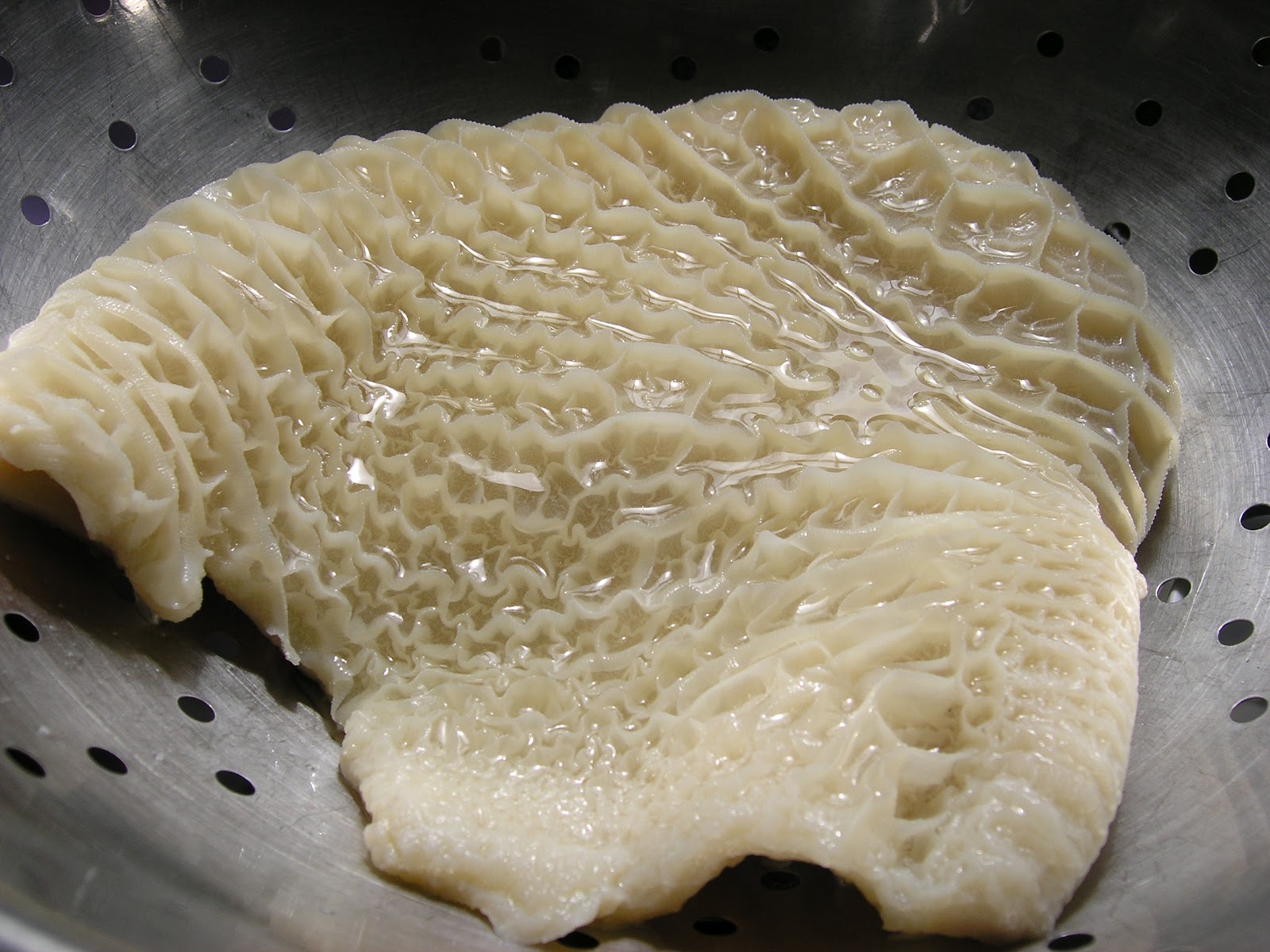
Book tripe needs to be boiled and rinsed to chewy tenderness before using, wash and gently squeeze it dry. Slice it thinly to make fringe-like pieces to be added to the bowl during assembly. For beef meatballs (bo vien), purchase them in asian markets in the refrigerator case; they are already precooked. Slice each one in half and drop into broth to heat through. When you're ready to serve, ladle them out with the broth to top each bowl.

garnish to add to your bowl of pho

frozen bo vien

bo vien or beef meatballs

beef tendon

book tripe

Very time consuming to prepare but if you're doing it for loved ones than it's all worth it!!
Let's kaukau!!  :D



Monday, May 02, 2011

Restaurant Style Egg Foo Yung


Ingredients:

5 large Eggs
1 tsp Salt (if using canned crabmeat, reduce to 1/2 teaspoon)
1 tsp Dry sherry
Dash Black pepper
1/2 C Fresh or canned crabmeat (or shredded cooked pork, chicken, ham, beef or shrimp)
1/2 C Julienne celery, no leaves
1/2 C Dried black mushrooms, softened in hot water for 15 minutes, squeezed dry, stems removed, and shredded
1 C Fresh bean sprouts (or drained and shredded bamboo shoots)
1/4 C Thinly sliced onion
3 Tbsp Canola, corn or peanut oil    

Restaurant-style Brown Sauce:

1 C Chicken broth
1/2 tsp Ketchup
1-1/2 tsp Light soy sauce
2 Tbsp Flour, mixed w/ 2 Tbsp cold water into a smooth paste

Cooking Instructions:

Gently beat the eggs with the salt, sherry and pepper. Add the crabmeat, celery, black mushrooms, bean sprouts and onion and mix well. Heat the oil in a non-stick wok or stir-fry pan over medium-high heat until the oil is hot but not smoking. Test by dipping the end of a spatula into the egg mixture and then into the oil; it should sizzle. Add the egg mixture to the hot oil. Let the eggs sit without stirring until the bottom is slightly set but the top is still runny. With a spatula, turn sections of the eggs over. Continue turning the eggs until the mixture is set on both sides. Serve immediately.

Sauce:

Mix the ingredients together in a saucepan. Cook over medium heat, stirring constantly with a wire whisk. Bring to a boil and stir until sauce is thickened. Simmer 2 minutes to eliminate the raw taste of the flour. Pour the sauce freely over the cooked eggs.

Enjoy!!


Monday, August 02, 2010

Shrimp Ceviche


Shrimp Ceviche

If you find the ceviche a little too acidic, drain out some of the juices after the marinating, add a little more avocado (or some olive oil) and/or a little more salt.

Ingredients


* 1 pound medium-small shrimp, peeled and deveined
* 2 Tbsp salt
* 3/4 cup lime juice (juice from 4-6 limes)
* 3/4 cup lemon juice (juice from 2-3 lemons)
* 1 cup finely chopped red onion
* 1 serrano chile, ribs and seeds removed, minced
* 1 cup chopped cilantro
* 1 cucumber, peeled diced into 1/2-inch pieces
* 1 avocado, peeled, seed removed, cut into 1/2-inch chunks

Method


1 In a large pot, bring to a boil 4 quarts of water, salted with 2 Tbsp salt. Add the shrimp and cook for 1 minute to 2 minutes max, depending on size of shrimp. (Over-cooking the shrimp will turn it rubbery.) Remove shrimp with a slotted spoon and place into a bowl of ice water to stop the cooking.

2 Drain the shrimp. Cut each piece of shrimp in half, or into inch-long pieces. Place shrimp in a glass or ceramic bowl. Mix in the lime and lemon juice. Cover and refrigerate for a half hour.

3 Mix in the chopped red onion and serrano chile. Refrigerate an additional half hour.

4 Right before serving, add the cilantro, cucumber, and avocado.

Serves 4-6.

This recipe was my wife's request since she loves shrimp. I made a large batch and she ate it for breakfast, lunch, and dinner!! LOL :)

Enjoy!!