Sunday, May 06, 2012

PHO Vietnamese Beef Noodle Soup Recipe


Ingredients:

2 medium yellow whole onions, cut in half, skin removed
1 large ginger knuckle or finger, or 2 medium.
5-10 pounds beef soup bones -- shin, leg, and knuckle bones, preferably with marrow -- not neck or tail bones. Cut into pieces about 3" - 4" long.
4 - 6 star anise
4 - 6 whole cloves
2  pieces of asian cinnamon stick (or 4" Mexican, in extremis)
1 pound beef stewing meat cut into 2" x 2" cube pieces.  Beef brisket is good.
1-1/2 tablespoons salt or Hawaiian rock sea salt, even kosher salt is good.
5-10 tablespoons fish sauce or nuoc mam or patis to taste.
1 1-inch chunk yellow rock sugar, or 2 tbs granulated white sugar.  Brown cane sugar can be used too.

Yield, about 5-6 quarts.

Procedure:

Broil the onion and ginger over a flame or on the electric burner. Blacken the onion and ginger but do not burn it.  You are going after the charred flavor.   Rinse under running water to get rid of all the loose blackened skin particles.  Set aside to cool.

Soak your bones in cold water first in the pot to release the blood about 1-2 hrs or so.  Drain and rinse the bones then refill the pot with fresh water and add the bones back.  Parboil the bones.

Turn on the hot water sink tap. Empty the bones and water into the sink. Allow water to go into the drain. Thorougly rinse the bones to get rid of any impurities that may have stuck to them. Set aside when clean. Thoroughly rinse the pot to get of any impurities that may have stuck to it. Return the bones to the pot, and cover with fresh, cool water.  One to two times is good.  You want a clean clear broth and this sets the standard.

Bring to the boil over high heat, reduce to a simmer. Allow to simmer for 10 minutes and skim the scum constantly.

Stuck the cloves into the round onions.

After the first skim, add the whole onions, ginger, anise, cloves, and cinnamon sticks to the stock. Check for scum at ten minute intervals, three times. Skim any scum that appears.

Beginning at the 1 hour mark, check the meat to see if it is tender (but not stringy). Check every 15 minutes thereafter. When the meat is cooked (usually about 90 minutes), remove it. Drain and immediately wrap (still hot) in aluminum foil. Reserve in the fridge, and use later as one of the pho meats.

Continue simmering stock. If water evaporates so bones become exposed, add more water as necessary. Stock should be finished at around 3 - 5 hours total simmer time (not counting the par-boil). Strain through a fine sieve. Check bones for any tendon which may have clung to them. If there is tendon, reserve in the same way as the cooked beef. Defat the stock if you like, but not too aggressively. Stock should be rich but not greasy.

All authentic Pho shops simmer their broths 6-10hrs or longer for a deep rich beefy broth.  Some use spice and broth packets to speed up production but real old school shops use real fresh herbs and fresh bones daily.  Their broth gets deep and and rich but super clear as they remove all fat from it.


For the bowls:

1  1/2-2 pounds small (1/8-inch wide) dried or fresh banh pho noodles ("rice sticks'' or Thaichantaboon)
1/2 pound raw eye of round, sirloin, London broil or tri-tip steak, thinly sliced across the grain (1/16 inch thick; freeze for 15 minutes to make it easier to slice)
1 medium yellow onion, sliced paper-thin, left to soak for 30 minutes in a bowl of cold water
3 or 4 scallions, green part only, cut into thin rings
1/3 cup chopped cilantro (ngo)
Ground black pepper

Garnishes arranged on a plate and placed at the table:
Sprigs of spearmint (hung lui) and Asian/Thai sweet basil (hung que)
Leaves of thorny culantro (ngo gai)
Bean sprouts (about 1/2 pound)
Red hot chiles (such as Thai bird or dragon), thinly sliced
Lime wedges


Assemble pho bowls:

The key is to be organized and have everything ready to go. Thinly slice cooked meat. For best results, make sure it's cold.

Heat the pho broth and ready the noodles. To ensure good timing, reheat broth over medium flame as you're assembling bowls. If you're using dried noodles, cover with hot tap water and soak 15-20 minutes, until softened and opaque white. Drain in colander. For fresh rice noodles, just untangle and briefly rinse in a colander with cold water.

Blanch noodles. Fill 3- or 4-quart saucepan with water and bring to boil. For each bowl, use long-handle strainer to blanch a portion of noodles. As soon as noodles have collapsed and lost their stiffness (10-20 seconds), pull strainer from water, letting water drain back into saucepan. Empty noodles into bowls. Noodles should occupy 1/4 to 1/3 of bowl; the latter is for noodle lovers, while the former is for those who prize broth.

If desired, after blanching noodles, blanch bean sprouts for 30 seconds in same saucepan. They should slightly wilt but retain some crunch. Drain and add to the garnish plate.

Add other ingredients. Place slices of cooked meat, raw meat and tendon (if using) atop noodles. (If your cooked meat is not at room temperature, blanch slices for few seconds in hot water from above.) Garnish with onion, scallion and chopped cilantro. Finish with black pepper.

Ladle in broth and serve. Bring broth to rolling boil. Check seasoning. Ladle broth into each bowl, distributing hot liquid evenly so as to cook raw beef and warm other ingredients. Serve your pho with with the garnish plate.

If you want authentic pho dac biet or combination pho served at pho shops, head to the chinatown butcher. There you'll find white cords of beef tendon and thin pieces of outside flank, not flank steak. Beef tendon which is actually "muscle" requires no preparation prior to cooking, Simmer it and the beef tendon in the cooking broth for 2-3 hours, or until soft chewy-tender.

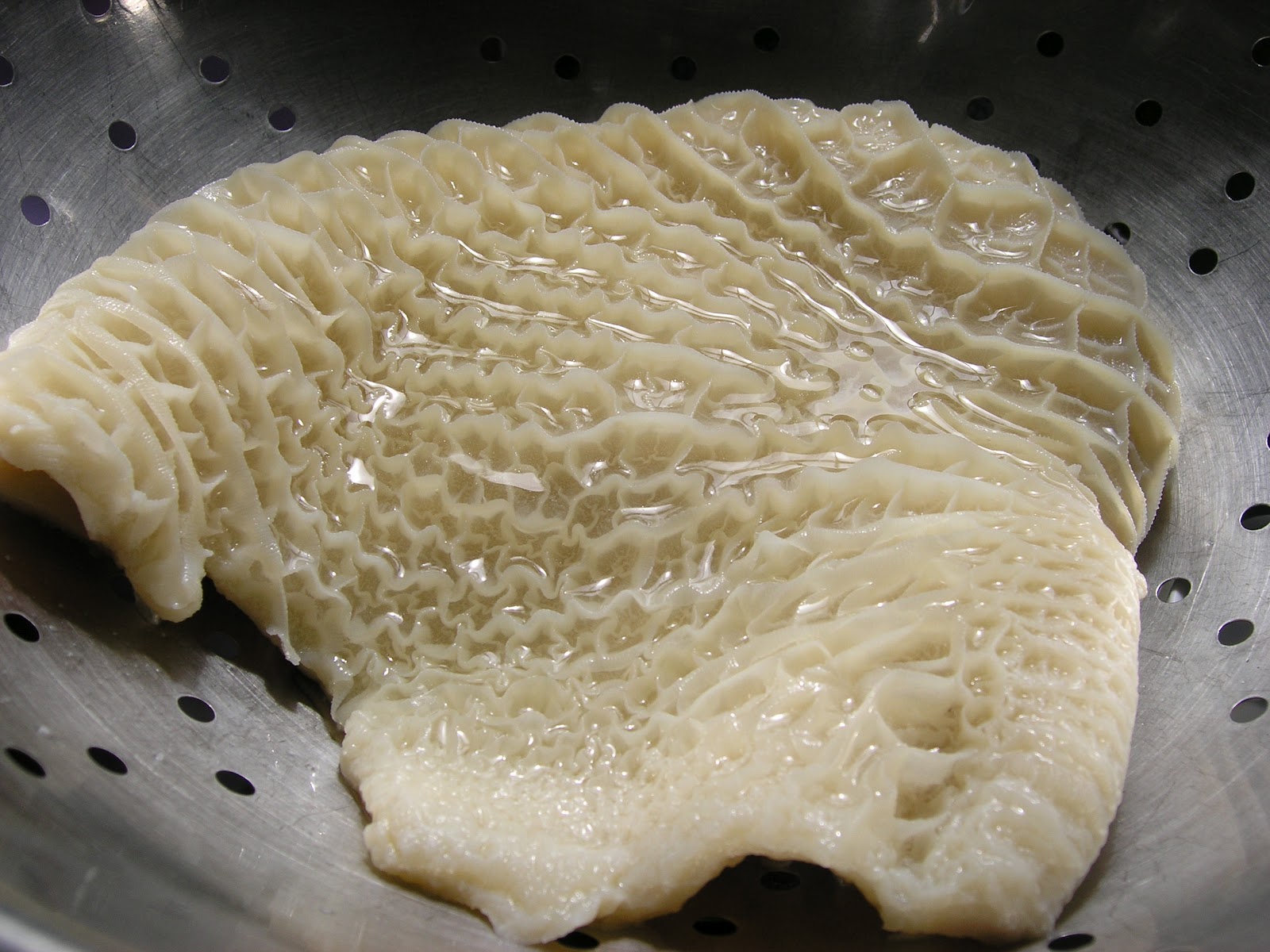
Book tripe needs to be boiled and rinsed to chewy tenderness before using, wash and gently squeeze it dry. Slice it thinly to make fringe-like pieces to be added to the bowl during assembly. For beef meatballs (bo vien), purchase them in asian markets in the refrigerator case; they are already precooked. Slice each one in half and drop into broth to heat through. When you're ready to serve, ladle them out with the broth to top each bowl.

garnish to add to your bowl of pho

frozen bo vien

bo vien or beef meatballs

beef tendon

book tripe

Very time consuming to prepare but if you're doing it for loved ones than it's all worth it!!
Let's kaukau!!  :D


Tuesday, April 24, 2012

Make Money On Mini-Gigs.com


Mini-Gigs.com is a micro job site where freelancers (that means you) join and offer their services for five bucks up to $100 US dollars. Instead of being hired by one person who pays you a flat rate every two weeks, you perform tasks that you offer to whoever orders your “gig”. If you use Mini-Gigs.com wisely it can serve as a good way to generate supplemental income in addition to your regular 9 to 5 job.

What to offer

To decide what types of jobs you want to do, you first have to know what you are good at. If you’re a good writer, perhaps you can offer an article writing service. Let the buyer choose a topic and you’ll write a 300+ word article that they can then post on their blog. If you’re good with Photoshop you can offer up simple photo editing tasks. Are you an artist? You can draw simple caricatures for five bucks or more technical gigs such as programming etc.

Time

Five bucks doesn’t sound like a lot. But what if it takes you just a few minutes to do the task? Then it becomes worth it. If you have to spend an hour completing the project, it’s just not worth it. Even a job at McDonald's would pay more. Some Mini-Gigs.com gigs I’ve seen revolve around people offering to cartoon-ize your picture. You might think this takes a long time, but actually all they do is put the picture into Photoshop, click a button which performs a series of actions, and voila the resulting image is saved and then sent to you. That’s just an example of a Mini-Gigs.com gig that’s worth it.

Profit

The buyer will be charged $5.00 up to $100. But Mini-Gigs.com has to make money of course, so they eat up $1.00 of each $5 transaction or 20%. This leaves you with $4.00. Not so fast, Paypal is the only way to collect money. They want their cut too. In the end, you’ll end up with about $3.92 for every completed Mini-Gigs.com gig. So can you make a real profit on Mini-Gigs.com? The answer is yes, but it is extremely difficult. The only way to do it is to offer a service you can provide quickly that is popular. Of course that is easier said than done. Finding customers is the hard part, but if you provide a good service you’ll get customers coming back and re-ordering from you time after time.

I just setup 2 gigs for $5 recipes!  hehehe  :)


Thursday, April 19, 2012

Costco Hot Turkey and Provolone Sandwich

Ok when I went to buy my favorite Caesar Chicken Salads and Turkey Wraps from Costco Nimitz in Honolulu there was a new item!!  Looked good but was so tiny!  hahaha 

Check out the pix!!

People that were buying it said it was "ono" or delicious in Hawaiian!!  yups looks like good kaukau!!

:)


Not bad for $3.99 but I'm still sticking to my turkey wraps and salads!!  ;)

Go kaukau!!

Costco Rotisserie Chicken

Ok if you haven't had it before than you must not be living in the US or are living under a rock.  LOL  Nah just joking!!  :D

For $4.99 USD you can't go wrong!!

Costco's Rotisserie Chicken is one of the greatest conveniences.  It can be served "as is " with side dishes such as rice, noodles, burrito wraps, lettuce wraps, vegetables, or salad for a chicken dinner if crunched for time. Or it can be turned into a different meal all together such as chicken enchiladas or chicken pot pie. It can give any dish the taste that you have been working hard in the kitchen!

Once you found the best looking rotisserie chickens, buy several at a time, so you can remove the meat at one sitting, and turn them into several.  If you buy them hot, try and pick them up at the end of your visit to the grocery store, just before you head home.  Once home, remove the meat in a timely fashion so it can be refrigerated or frozen quickly to avoid harmful bacteria or food poisoning.  As with any cooking endeavor, make sure you start with a sharp knife.  It is suggested the knife should be sharpened before each use.

Place the chicken on a clean cutting board breast side up (as it comes in the container from the store). Cut the rubber band tie and remove. Run your knife along the center of the chicken to find the bone.  Slide the knife just off to one side and cut along the bone to loosen the breast from the center bone.  Next run your knife between the leg and the breast meat gently easing it until you feel the bone.  You will be also separating the wing at the same time.  The breast should easily be removed from the bird, and place on the cutting board.  I treat the wing as the cooks treat, as they don't have enough meat to remove for use in other recipes.  Cut the breast into the size you use for your recipes.   Now repeat wth the other side.  Store the meat in a container or resealable bag for storage.  Now gently move the leg at the joint where it connects to the body until it separates.  Repeat with the other leg.  Remove the skin.  The meat comes off easily by using your hands to pull it off the bones for the legs.  Place this meat in the storage container.  Now look at the carcus, and using your hands, pull off any usable meat, especially from the underside.  The carcass can now be used to make chicken stock if you like or can be frozen as to make this chicken stock at a later time.  Or make sure you dispose of it carefully if you are not using it.  If using the meat in the next day or 2, place in the refrigerator. Otherwise it freezes beautifully for future recipes.


Monday, April 09, 2012

Filipino Foods: the basics

Ok here some good graphics I found on the net.

Explains it all about Filipino cuisine!

Kain tayo!!  Mangan tayon!!  kaukau time!!  :D


Saturday, April 07, 2012

Why is Pinterest so addictive ha?

     I didn't know about Pinterest.com until my sister invited me a few months back.  I got a invite from her in my gmail account.  I click on it and thought to myself what is this new site about.  I was suprised to see a lot of women's likes or "pins".  I saw FOOD, clothes, funny pix, dreamboards, all in a graphical photo gallery format but with the ability to like and "pin" or post to your own wall like in Facebook.  
Now that Pinterest is in the limelight I want to share with your a photo of "Why is Pinterest so addictive?"

     If you haven't tried the site out yet.  Let me warn you that it really is addictive.  Especially the food pix or to me the food "pron"!  hahaha  :D

Pinterest.  The latest player in the internet social sites.


Tuesday, March 27, 2012

Pipi Kaula - Hawaiian Dried Beef Shortribs


Pipi kaula is Hawaiian traditional dried beef or jerky made with salted or brine-soaked meat, but today contemporary versions use soy sauce, ginger, honey,sesame seeds and even kimchi seasonings.

Traditionally, the meat is sprinkled with Hawaiian sea salt or brined before drying. The sun and wind dry the beef strips to a chewy texture that's softer than jerky. Then the pipi kaula is fried or charcoal broiled before eating with poi or steamed rice.

Today, people prepare pipi kaula with various beef cuts, such as round steak, and multicultural condiments, including honey, garlic powder, sherry, sesame seeds and commercially packaged dry kimchi mix. Drying methods also include arranging in a screened dry box, oven-drying and hanging by stainless steel hooks high over a stove like famous James Beard Award winner restaurant "Helena's Hawaiian Foods" in Honolulu, deep in the heart of Kalihi where I grew up.

A good friend of mine Mr. Brandon Nunes requested this recipe since he loves bringing his family to Helena's.  He keep raving about the pipi kaula!  So here it is Brandon for you!  Now go make some and bring in some fo lunch at work!

Here is two versions of this delicious Hawaiian delicacy.


Short Ribs Pipi Kaula
(Shoyu Style)

Ingredients:

5 pounds kosher short ribs
1 cup soy sauce
6 tablespoons sugar
1 teaspoon grated fresh ginger
1 clove garlic, crushed


Procedure:


  1. Butterfly each short rib into 1 long piece, about 1/2 inch thick. 
  2. Combine remaining ingredients and marinate meat in mixture 1 to 2 hours, turning several times.  Drain ribs. 
  3. Arrange in a screened dry box and sun dry 1 full day, turning ribs once. 
  4. To serve, pan fry in a little oil or oven broil. 
  5. Slice into smaller pieces while still hot.


Oven-Dried Pipi Kaula


Ingredients:

4 pounds flank steak
2 cups soy sauce 
1/3 cup Hawaiian salt
2 tablespoons sugar
1/4 teaspoon pepper
3 teaspoons grated fresh ginger
2 Hawaiian chili peppers, crushed
2 cloves garlic, minced


Procedure:

  1. Trim fat from steak and slice meat into long strips, about 2 inches wide. 
  2. Blend remaining ingredients. In a rectangular baking dish, pour a little marinade and arrange a single layer of meat; add more marinade. 
  3. Repeat until all of meat is in the marinade. 
  4. Refrigerate 24 hours.
  5. Preheat oven to 165 degrees. 
  6. Drain steak strips; reserve marinade. 
  7. Place meat on cake-cooling racks set on foil-lined baking sheets. 
  8. Oven-dry 6 to 7 hours until meat has a jerky-like texture.
  9. Wrap and refrigerate up to 1 week or freeze up to 8 months. 
  10. To serve, oven-broil 5 inches from heat until meat is heated through, about 3 minutes on each side.
  11. Slice diagonally.

Ok get your rice and poi!!  Let's kaukau!!

:D


Saturday, March 17, 2012

Pressure Cooker Corned Beef and Cabbage Recipe


Ingredients:

4-6 cups water to just cover the brisket.
2 ½ - 4 lbs point cut corned beef brisket with spice packet
3 garlic cloves, smashed and coarsely chopped
2 bay leaves
4 carrots , cut into 3 inch pieces
1 head cabbage , cut into 6 wedges
6-8 peeled and quartered potatoes
3 peeled and quartered turnips or celery (any additional veggies you enjoy)
1 round onion quartered into wedges (optional)
horseradish sauce (optional)


Directions:


  1. Pour water into pressure cooker.
  2. Add brisket; over high heat, bring water to a rolling boil.
  3. Skim residue from surface and spice packet.
  4. Add garlic and bay leaves and secure lid.
  5. Over high heat, bring to high pressure.
  6. Reduce heat to maintain pressure and cook 45mins to 1 hour.  Check for tenderness.  If you overcook it the meat will fall apart into shreds and we don't want that.  You'll want a soft tender intact slices of corned beef.
  7. Release pressure according to manufacturer's directions and remove lid.
  8. Add vegetables to brisket and liquid, stirring gently.
  9. Secure and lock lid over high heat, bring steam to high pressure.
  10. Reduce heat to maintain pressure and cook 6 minutes.
  11. Release pressure according to manufacturer's directions.
  12. Remove lid.  Cool pressure cooker over running water after releasing pressure valve.
  13. Plate dish and serve with bread/rolls with butter or how we kaukau in Hawaii with hot steamed rice!
  14. Simple and fast.  Crockpot cooking is for people who want to wait.  Not me I want to cook fast and kaukautime!!  LOL  :D


Serve with horseradish sauce or yellow mustard.  In Hawaii we also got shoyu or soy sauce with tobasco sauce mixed together instead of the yellow mustard or horseradish sauce.  Get da rice let kaukau now!!


Servings: 6

Ok let's kaukau!! It's St Patrick's Day!!  :D  Enjoy!  God bless!

Monday, February 20, 2012

Crispy Won Ton with Sweet Sour Sauce


So the left over wontons that my sister made were the next days appetizers by deep frying them in hot oil and making a simple basic Chinese sweet sour sauce for dipping.

Looks good sis!  Keep it up!


Ingredients:


1/4 cup white or rice vinegar
4 TBsp brown sugar
1-2 TBsp ketchup
1 TBsp soy sauce
1 TBsp cornstarch mixed with 1 cup water

Procedure:


Mix the vinegar, brown sugar, ketchup, and soy sauce together and bring to a boil in a small pot. Mix together the cornstarch and water, add to the other ingredients and stir to thicken.

You can also add 1 green pepper, cut into chunks, and pineapple chunks as desired after adding the cornstarch. For a thicker sauce, increase the cornstarch to 4 teaspoons while keeping the water constant.

Adjust for sweetness or tartness by adding more or less sugar or vinegar etc.


Pork/Shrimp Wontons:

1lb. ground pork
1/4 lbs raw shrimp (chopped)
1 tsp sugar
1 tbsp cornstarch
1 tbsp oyster sauce
1 tbsp sesame oil
chopped green onion
35-40 wonton wrappers


Enjoy let's kaukau!!  :D


Wor Won Ton Mein (Dumplings with Noodles in Soup)


My sister Lynn made this over the weekend.  Looks ono (delicious) to me!!  So here is her recipe to share with everyone.


Enjoy let's kaukau!!  :D


Ingredients:

Pork/Shrimp Wontons:

1lb. ground pork
1/4 lbs raw shrimp (chopped)
1 tsp sugar
1 tbsp cornstarch
1 tbsp oyster sauce
1 tbsp sesame oil
chopped green onion
35-40 wonton wrappers


Soup Base:

1 gal. water
3 tbsp chicken broth mix powder or 1 can chicken stock
1/4 cup soy sauce
2 tbsp sesame oil
2 or 3 green onion

p.s.  You may add additional garnishes like Chinese sweet roast pork (char siu) or any other type of meats.  Shredded chicken, sliced ham, or even spam if you're from Hawaii!  lol  ;)


Sunday, February 05, 2012

My favorite Filipino dish PINAKBET!!

My favorite Filipino dish PINAKBET!!


Ingredients:

4 Japanese long eggplant, cut in 3-inch pieces
2 cups water
1 teaspoon Hawaiian salt
25 dried shrimp
2 cups cherry tomatoes, cut in half 
1/2 small onion, sliced
2 inch finger piece ginger sliced in half crushed
1-2 tablespoon minced garlic  More the better!
Salt and pepper, to taste
2 tablespoons bagoong (Filipino fish sauce) or harm ha (Chinese fine shrimp paste)
1/2 cup water 
2 cups long beans, in 2- to 3-inch pieces
1/4 lb sweet peppers
2 long bittermelons cut in 3-inch pieces
1 pound whole okra pods
2.5-ounce bag chicaron (fried pork rinds) or fresh sitsaron or lechon kawali.


Instructions:

Soak eggplant in water and Hawaiian salt for 30 minutes then drain.
Heat a large pot over medium-high heat. Add dried shrimp to hot, dry pot. Add dash of water to lock in flavor. Layer tomatoes, onion, ginger, garlic, salt, pepper and 1 tablespoon bagoong over shrimp. Add water. Reduce heat and simmer until tomatoes are soft, 3 to 5 minutes.
Add long beans and stir gently. Cover and cook until beans are half-done, about 3 minutes.
Layer bittermelon, eggplant and okra in pot. Break pork rinds into bite-sized pieces; sprinkle over top. Add remaining 1 tablespoon of bagoong and a little more water, if needed.

DO NOT STIR!   True Ilocanos never stir the pinakbet in the pot.  Because it would smash the already tender veggies.
Cover and simmer until vegetables settle, about 10 minutes. "Intalta" -- turn the ingredients by lifting, tossing, and shaking the pot. Cover and simmer 5 minutes. Serves 8.


Watch the videos below!


Pinakbet or pakbet is a popular Ilokano dish, from the northern regions of the Philippines, although it has become popular throughout the archipelago. The word is the contracted form of the Ilokano word pinakebbet, meaning "shrunk" or "shriveled".[1] The original Ilokano pinakbet uses bagoong, of fermented monamon or other fish, while further south, bagoong alamang is used. The basic vegetables used in this dish include native bitter melon, eggplant, tomato, okra, string beans, chili peppers, parda, winged beans, and others. Root crops and some beans like camote, patani, kadios are also optionally added. The young pod of marunggay is also added. It is usually spiced with ginger, onions, or garlic. A Tagalog version usually includes calabaza. Most of these vegetables are easily accessible, and are grown in backyards and gardens of most Ilokano households. As its name suggests, it is usually cooked until almost dry and shriveled; the flavors of the vegetables are accentuated with shrimp paste. In some cases, lechon, chicharon, or other meats (most commonly pork) are added. It is considered a very healthy dish, and convenient in relation to the harsh and rugged, yet fruitful Ilocos region of the Philippines.

The vegetable dish pinakbet is more than a regional cuisine. It is an enduring symbol of the Ilokano palate and a lucid display of the Ilokanos' history of contestations and struggles with the physical and social environment. The recipe weaves intimations of the cultural productions of the Ilokanos' transaction to their arid and less productive land. (Caday, 2009)
Pinakbet is similar to the Provençal (French) vegetable stew ratatouille except for its sauce.


Enjoy and let's kaukau!!  :D

Check out this Raw Food Vegan, Vegetarian Video Recipe Site!

Check out this Raw Food Vegan, Vegetarian Video Recipe Site!


http://www.raweats.tv/


Got smoothie and juicing recipes too!!  :D